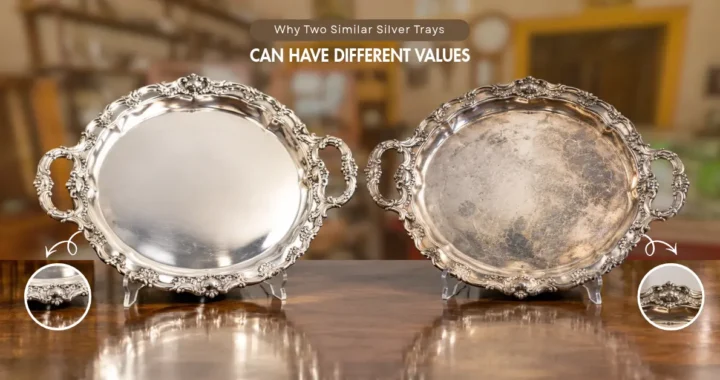
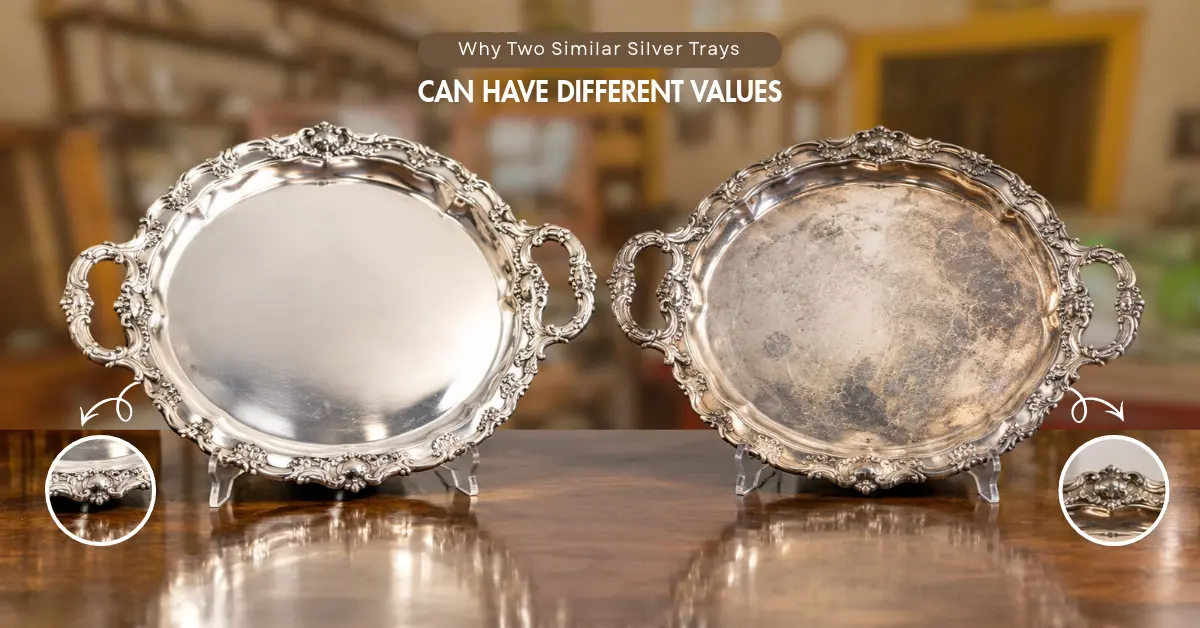
Two silver trays might look almost the same, with similar handles, borders, and size. But when you look closer, their values can be surprisingly different.
Why? Looks aren’t everything. One tray could be solid sterling silver, while the other has only a thin silver layer over another metal. Even if both are sterling, things like the maker, condition, weight, and history can all change what buyers will pay.
If you’ve inherited a tray or are thinking about selling one, knowing these differences will help you get started.
This guide covers what affects a silver tray’s value, which details to check, and how to get your tray ready for an appraisal.
1. Similar Looks Do Not Mean the Same Silver Content
The first question is what each tray is made from.
Sterling silver contains 92.5% silver. Silver-plated objects have a silver surface over a different base metal. Both can look attractive, particularly when polished, but they are different materials.
A plated tray might resemble a sterling example closely enough that a front-facing photograph does not reveal the difference.
Check underneath for letters, numbers, or symbols. A “925” mark means sterling silver, while marks like “EPNS” usually mean silver plate. Still, it’s important to look at all the marks together instead of relying on just one.
Don’t assume an unmarked tray has no value, or that a marked tray is always genuine. If you’re not sure about the material, get a professional opinion before looking at prices.
2. Hallmarks Can Help Explain the Difference
The underside of a tray may provide more useful information than its decorated surface.
Depending on where and when it was made, its marks may help identify the silver standard, the maker or sponsor, and the assay office. Some hallmark systems also include date information.
For example, modern UK hallmarks include three required parts: a sponsor’s mark, a metal and fineness mark, and an assay office mark. There may also be a date letter, but that’s optional. Other countries have their own systems.
Photograph the complete group of marks, then take closer pictures of each one. Include any nearby numbers or lettering.
Don’t guess based on a single symbol that looks like something you saw online. The shape around a mark and the other marks next to it can also be important.
3. The Maker Can Matter as Much as the Design
Two trays may share a similar shape without having the same maker.
A maker’s name helps place an object within a particular body of work. Buyers may be interested in a specific workshop, designer, or manufacturer, rather than simply looking for a silver serving tray.
Major silver auction collections include work by makers such as Paul Storr, Gorham, Tiffany & Co. and Georg Jensen, showing the importance of attribution within the collecting market.
But just because you recognize a name doesn’t mean you can skip a closer look. Each piece still needs to be checked carefully.
When you ask for a silver tray appraisal, send clear photos of the maker’s mark. Don’t just use a family description like “a Tiffany-style tray,” since that only describes the look, not the actual maker.
4. Size Alone Does Not Tell You the Weight or Construction
A bigger tray isn’t always heavier or sturdier.
One tray may have a broad, thin surface, while a smaller example feels more solid. Handles, feet, borders, and other components also deserve attention when assessing construction.
If you weigh your tray at home, write down the weight and the unit you used. Don’t switch between grams, regular ounces, and troy ounces without checking how to convert them.
Also, don’t assume the whole weight is silver. An expert will need to check what the tray is made of and whether any parts aren’t silver.
To compare trays, write down the length, width, whether you measured with the handles, and the total weight. These details are more helpful than just calling the tray “large.”
5. Small Condition Differences Can Have a Big Effect
Two trays might look equally well-kept from far away, but a closer look can tell a different story.
Check for:
- Splits around handles or borders.
- Dents in the serving surface.
- Bent or uneven feet.
- Deep scratches.
- Loose attachments.
- Signs of solder or previous repairs.
Not all condition problems are equally important. A small repair isn’t the same as a major restoration. Too much polishing can wear away decoration or marks, and removing an engraving can leave a thin spot.
When you ask for an assessment, describe any visible problems. It’s better to send a clear photo of the damage than a nice-looking picture that hides it.
6. Decoration Needs More Than a Quick Glance
A tray with lots of decoration isn’t always worth more than a plain one.
When you compare two trays, check how the decoration was made and how well it’s held up. Are the details sharp? Does the border look even? Are there spots that seem extra smooth or worn down?
Ask the evaluator whether the decoration appears original to the tray and how it relates to the maker and period.
To show details, take one photo straight on and another from a slight angle. This helps make raised borders and decorations easier to see.
You don’t have to figure out the technique yourself. Just make sure your photos are clear enough for an expert to review.
7. Age Matters, but Older Does Not Always Mean More Valuable
It’s easy to think an older tray is always worth more. Age matters, but condition and rarity are important too.
Begin by sorting out what you actually know from what you’ve just heard.
For example, “my grandmother received it in 1950” establishes a point in the family’s ownership. It does not necessarily establish when the tray was manufactured.
Write downWrite down any dates you know, and say where you got them. Keep receipts, photos, and other records with the tray. This helps determine the value of antique silver and provides further background on assessing an item beyond its appearance.
8. Engravings and Ownership History Can Change the Picture
Take a close look at any initials, coats of arms, or presentation inscriptions before thinking about removing them.
Some engravings can link a piece of silver to an important owner, collection, or event. A documented ownership history, or provenance, can matter a lot to collectors. A documented ownership history, with supporting evidence, makes it easier to investigate. Search for old photographs showing the tray, original receipts, letters, or presentation records.
Take photos of inscriptions just as they are, including dates and punctuation. Don’t shorten the wording when you send details to an expert.
If you don’t know who the initials belong to, say so. It’s better to leave a question open than to guess and be wrong.
9. A Silver-Plated Tray Should Be Compared With Similar Plated Pieces
If you compare a silver-plated tray to a sterling one, you might get the wrong idea about its value.
The distinction does not mean every plated piece should be dismissed. It means you need the right comparison.
A good comparison is about more than shape. Look for the same material, a similar maker or time period, similar size, and a clear description of the condition. Watch for worn spots where the metal underneath might show.
Take photos of these areas instead of trying to hide them.
If you are unsure which category your tray belongs in, begin with an identification request. The antique silver trays page is a relevant starting point for discussing a tray with Antique Silver Buyers.
10. Online Asking Prices Can Give the Wrong Impression
Finding a similar tray advertised online does not establish what yours will sell for.
An asking price is just what the seller hopes to get. Before you use it for comparison, check if the item actually sold and what the listing says about it.
Create a short comparison sheet with:
- Material and silver standard.
- Confirmed maker.
- Dimensions and weight.
- Condition and repairs.
- Date of sale.
- Whether the figure includes additional charges.
If key details are missing, be careful about using that comparison.
Our vintage silver tray value guide offers another introduction to the identification questions worth considering before you settle on a figure.
11. An Appraisal, Asking Price and Purchase Offer Are Before you compare numbers, find out what each one actually means. represents.
Are you discussing an insurance replacement valuation, an expected auction result, a dealer’s retail price or an offer to buy the tray now?
Each of these numbers answers a different question. Treating them as if they’re the same can make the tray’s value confusing.
When you ask for an assessment, explain why you need it. Maybe you’re thinking about selling, getting insurance, or dividing up inherited items.
For a purchase offer, ask how payment, collection or delivery will work and whether any costs will be deducted. Keep the terms with your photographs and correspondence so you can compare offers on the same basis.
12. Prepare Clear Photos Before Requesting a Quote
Clear photos help the person you’re contacting see what might need a closer look.
Use daylight and a plain background. Avoid filters, strong reflections and pictures taken from so far away that the marks disappear.
Include photographs of:
- The complete front.
- The complete underside.
- Every mark and inscription.
- Handles, feet and borders.
- Dents, splits and repaired areas.
Add measurements, weight if you have it, and a short history of who owned the tray. Say if you have other pieces that might go with it. Inquire through What Is My Silver Worth? and provide the information available.
Ask whether photographs are sufficient for an initial discussion or whether the tray needs to be examined in person.
Common Questions About Silver Tray Value
Is a tarnished tray worth less than a shiny one?
Shininess isn’t a good way to judge value. Too much polishing can actually wear away details, so don’t assume a shiny tray is in better shape. Ask for advice before trying to clean an antique you’re not familiar with.
Can two trays from the same maker have different values?
Yes. A maker’s name is only part of the assessment. Differences in condition, rarity and history still need considering, rather than assuming that matching names produce matching prices.
Should I repair a damaged tray before selling?
Ask for an assessment first. Describe the damage, share photographs and discuss whether proposed work is appropriate. Get the repair cost in writing before deciding.
Can someone value my tray from one photograph?
A single photograph usually leaves important questions unanswered. At minimum, provide front and underside views, clear markings, measurements, and photos of the damage. Ask what further checks are needed before relying on a figure.
Find Out What Makes Your Silver Tray Different
Two trays might look nearly the same, but they can have different materials, construction, condition, and style. Before you sell, turn the tray over, note any marks, and collect any information you have. Compare similar trays, and be clear whether you want an appraisal or an offer to buy.
If you would like to discuss your piece, contact Antique Silver Buyers with photographs and a short description. Understanding the details is the first step toward understanding why your tray may be valued differently from another.