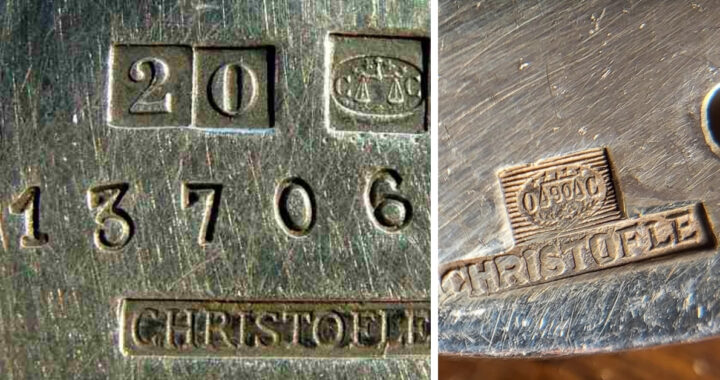
A Christofle spoon, tray, tea service, or serving piece may look elegant at first glance, but its most revealing detail is often no larger than a fingernail. Tiny stamped symbols can identify the maker, suggest whether the object is solid silver or silver-plated, and help place it within a broad production period. This practical Christofle silver hallmark guide explains what to look for without turning the process into a complicated history lesson.
Why Christofle Hallmarks Matter
Christofle has produced fine tableware and decorative objects since the nineteenth century, and its marks changed as the company, French hallmarking rules, and manufacturing methods evolved. A hallmark can connect an object to a maker, metal standard, production era, or special collection.
That matters whether you inherited one fork or found a complete service in an estate. Reading the marks correctly helps you describe the piece accurately before collecting, insuring, appraising, or selling it.
Start With the Metal: Solid Silver or Silver Plate?
The first question is not simply, “Is this Christofle?” It is, “What is it made from?”
French solid-silver pieces generally carry a state guarantee mark and a maker’s mark. Christofle explains that the French silver guarantee has used the head of Minerva since 1838. Its larger Minerva mark indicates .925 silver, while the smaller version indicates .800 silver. The maker’s mark is separate and traditionally appears in a diamond- or lozenge-shaped frame. An “800” mark therefore points to an 800-fineness silver alloy; it should not automatically be treated as proof of silver plate.
Silver-plated pieces use a different system. A base metal is covered with silver, so the marks usually identify the manufacturer and, on later wares, the plating quality rather than the purity of the entire object. This distinction is central to understanding Christofle silver plate hallmarks.
Early Christofle Silver Marks: CC, the Bee, and the Balance
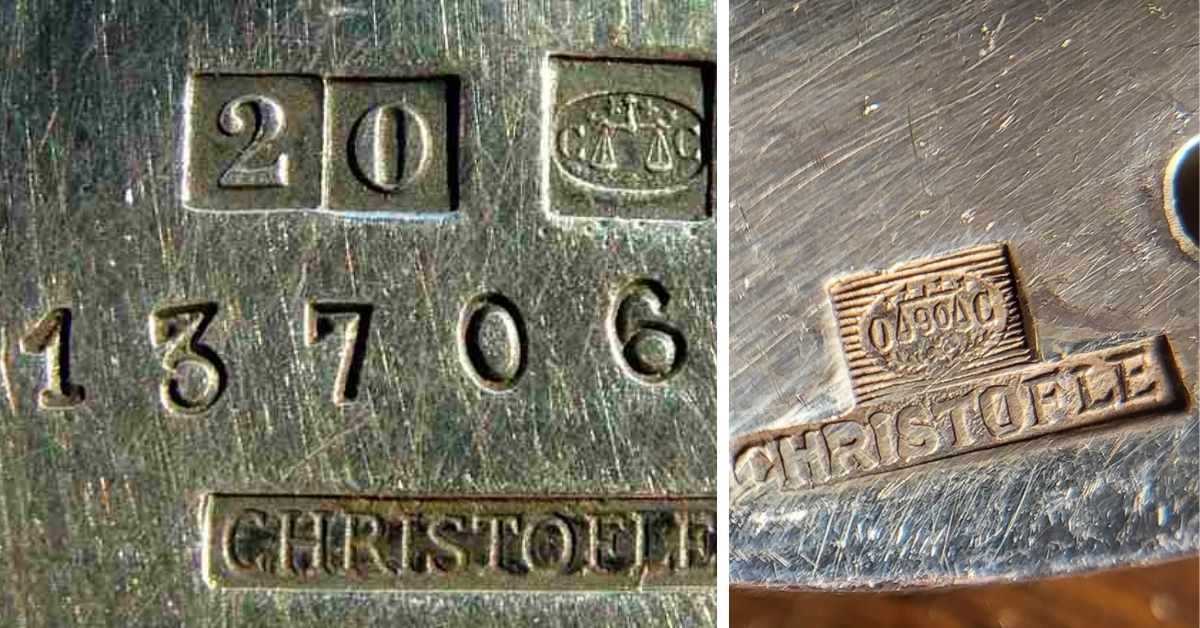
The initials “CC” refer to Charles Christofle. According to Christofle, the company’s first registered maker’s mark, dating to 1832, combined those initials with a rifle bayonet. In 1853, a new solid-silver maker’s mark used a bee beneath three stars, framed by the two Cs.
For silver-plated metal, collectors often look for the better-known balance design. Christofle states that its balance stamp was used from 1844 until 1935. The emblem combines scales or a balance with a bee, stars, laurel branches, and the founder’s initials. On a worn stamp, you may notice the Cs first and see the balance only under angled light.
Avoid dating a piece from one blurred symbol. Compare the entire group, including the frame shape, letters, nearby numbers, and the word “Christofle” when present.
The 1935 Change: OC and the Chess Knight
One of the easiest turning points to remember came in 1935. The initials changed from “CC” to “OC,” meaning “Orfèvrerie Christofle.” For plated wares, the mark adopted a chess knight with the letters OC. It remains one of the most recognizable Christofle hallmarks.
French rules were refined again in 1983 to distinguish two qualities of silver-plated metal. Later quality marks may include the Roman numeral I or II in a square stamp. These numerals refer to plating quality; they are not sterling fineness marks such as 925.
Gallia and Other Collection-Specific Marks
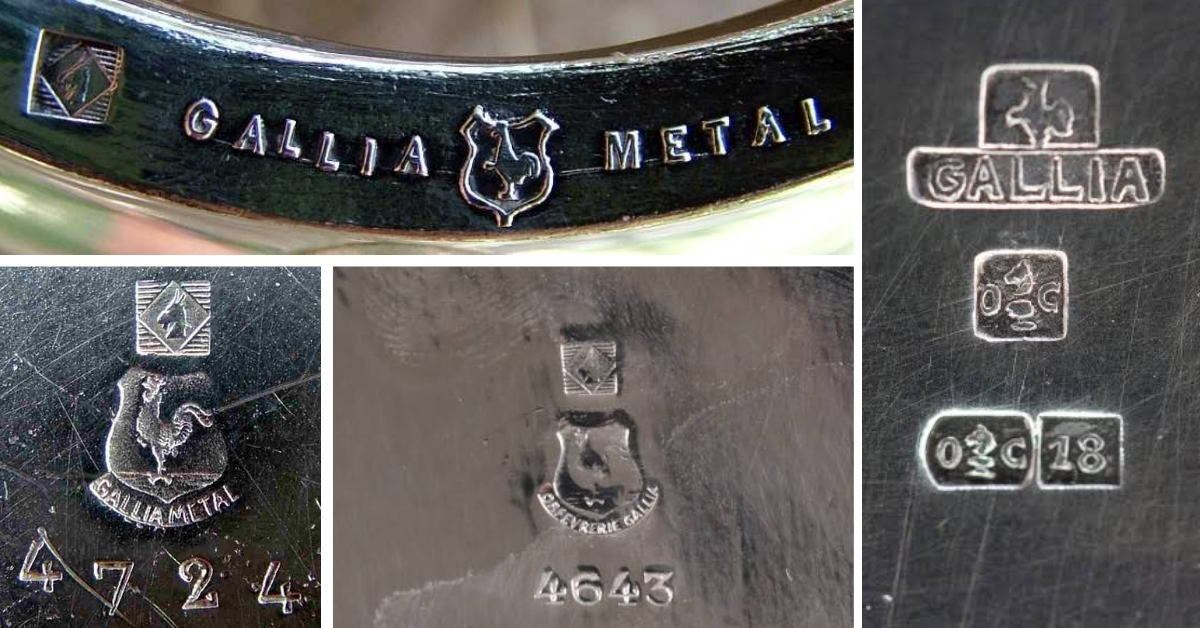
Not every genuine piece displays the standard balance or knight as its clearest symbol. Christofle used additional emblems for particular lines. Gallia is associated with a rooster, while a cat’s head appeared on certain silver and gilded pieces. Orfèvrerie Gallia began at the end of the nineteenth century and entered Christofle’s collections from the 1920s onward.
A rooster beside the word “Gallia,” therefore, should not be dismissed because it looks different from other Christofle silver marks. It may be the clue that identifies the collection.
Where to Find the Marks
Christofle advises checking the inside of a fork or spoon and, in some cases, the back of the handle. On trays, bowls, teapots, and other hollowware, inspect the underside or base.
Use a bright lamp and tilt the object slowly so light moves across the impression. A phone camera in macro mode can reveal details that are difficult to see with the naked eye. Photograph the marks from several angles before polishing anything, as heavy cleaning can make a faint stamp harder to read.
A Simple Christofle Hallmark Identification Checklist
For reliable Christofle hallmark identification, work through the evidence in order:
- Photograph every stamp in sequence, not only the clearest one.
- Record the letters, symbols, frame shapes, numbers, and words exactly.
- Separate the maker’s mark from the French guarantee or plating-quality mark.
- Compare the full combination with dated examples instead of matching one bee, rooster, or knight.
- Consider the object itself—its pattern, construction, condition, and whether all pieces in a set carry compatible marks.
This approach reduces the chance of mistaking a collection emblem for a purity mark or assuming that every number refers to silver content.
What the Hallmark Can—and Cannot—Tell You About Value
A hallmark is an important starting point, but it is not a price tag. It may help establish the maker, material, and approximate era; value also depends on pattern, rarity, condition, completeness, repairs, provenance, and current demand. Antique Silver Buyers likewise identifies condition, rarity, demand, and professional appraisal as important parts of valuation.
A desirable plated pattern in excellent condition may interest collectors, while a damaged or incomplete solid-silver item may require a more careful assessment. Christofle advises owners seeking authentication or a value estimate to consult an expert or auction house.
A Small Mark Deserves a Careful Look
The best way to understand Christofle silver hallmarks is to treat them as a group of clues. Start with the metal standard, identify the maker’s emblem, look for CC or OC, and then consider collection symbols such as the Gallia rooster. Most importantly, avoid making a final judgment from one worn stamp.
When the marks remain unclear or when you are considering a sale, an experienced silver buyer can review the hallmark, construction, condition, and market appeal together. Antique Silver Buyers offers appraisals for antique and estate silver and has more than 25 years of experience in the field. Clear photographs of the full piece and close-ups of every mark are the best place to begin.