Have you ever found an old silver spoon in a family collection, an antique shop, or a jewelry box you inherited and wondered about its origins? At first, it might look ordinary, but a few small marks on the handle can reveal its age, where it was made, who made it, and how much silver it contains.
Antique silver spoon hallmarks can be tricky to figure out.
Some are worn down, some look almost the same, and others are just confusing. Since different countries use different marking systems, it’s easy to mistake silver-plated cutlery for solid silver or miss the marks entirely.
Learning what the markings mean can make it much easier to identify an antique silver spoon. This guide covers the most common hallmarks, explains their meanings, and shows how you can use them to learn more about your old silver spoon.
What are antique silver spoon hallmarks?
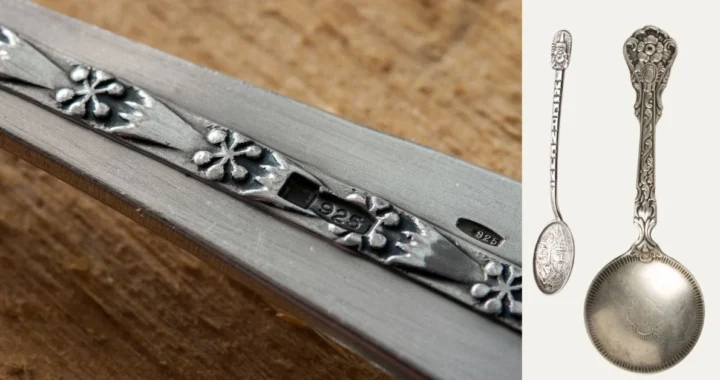
Hallmarks are little symbols, letters, or numbers that are stamped into silver. They give information about the metal, the maker or sponsor, and occasionally the place and year it was tested.
On many British antique spoons, you’ll find several marks on the back of the handle or stem (often close to the bowl).
Not every country uses the same hallmarking rules. British, American, and European silverware often have different marks. That’s why it’s important to figure out the likely country of origin before trying to interpret the marks.
Understanding the Main Antique Silver Spoon Hallmarks
British silver hallmarks are especially helpful because they can reveal a lot about a spoon’s history. Here are the main marks you might see.
1. Silver Standard or Purity Mark
The standard mark shows the percentage of silver content. One of the most common marks is 925, which means 925 parts silver out of 1,000, or 92.5% pure silver. This is the standard for sterling silver.
Older British sterling silver will usually have the lion passant (lion walking) on it. Britannia silver (95.8% silver) is traditionally depicted as Britannia seated.
These marks help you tell the different silver standards apart, but the exact marks can change depending on when and where the spoon was made.
2. Assay Office Mark
An assay office mark shows where the silver was tested and hallmarked, which can help you figure out where the spoon came from.
Some familiar British assay office symbols include:
- Leopard’s head: London
- Anchor: Birmingham
- Rose: Sheffield (the traditional town mark)
- Castle: Edinburgh
These marks are especially helpful for older British spoons. Since hallmark designs and systems have changed over time, always compare any mark with a reference from the right period.
3. Maker’s or Sponsor’s Mark
A maker’s mark, or sponsor’s mark in modern British hallmarking, identifies the person or business that submitted the item for hallmarking.
It’s usually a group of initials inside a small shape. These initials can help link a spoon to a specific silversmith or manufacturer.
However, initials alone aren’t always enough to identify the maker. Different silversmiths might have used the same initials, so you should also check the date and assay office marks.
4. Date Letter Mark
A date letter is often found on a silver spoon to show when it was hallmarked. It’s a single letter inside a specific shield or cartouche.
The key thing to remember is that date letters follow different cycles in different assay offices and time periods. The same letter can mean different years in different cycles. The assay office mark is against a good hall mark reference.
5. Duty Mark
Some British silver spoons made between 1784 and 1890 have a duty mark. This mark showed that duty had been paid on silver goods during that period.
It’s often the head of the current monarch. If you see this mark along with other classic British hallmarks, it can help you date the spoon.
How To Identify Antique Silver Spoons
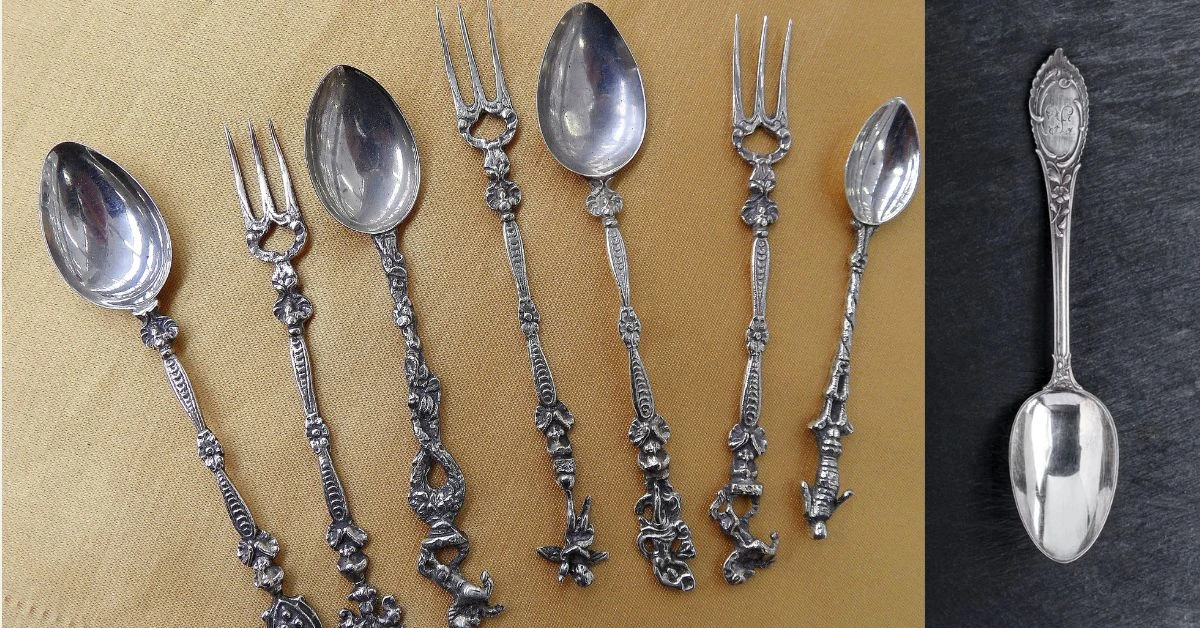
Recognizing individual symbols is helpful, but you should look at the whole spoon before making any conclusions. Here are some practical steps for Marks on the Spoon.
Start by turninStart by turning the spoon over and looking at the back of the handle or stem. You’ll probably need a magnifying glass because antique silver markings can be very small. Look for letters, numbers, animal symbols, and other stamped designs. Take a clear photograph so you can see the details.
Step 2: Check Whether It Is Solid Silver or Silver-Plated
Not every silveNot every silver-colored spoon is solid silver. Some are silver-plated, which means they have a layer of silver over another metal.
Examples such as:
- 925 or Sterling: standard indication of sterling silver.
- EPNS: Electroplated nickel silver.
- EPBM: Electroplated Britannia metal.
These marks can help you tell the different types of cutlery apart. Always consider the marks along with the spoon’s construction and other details.
Step 3: Identify the Maker’s Mark
Check the initials or marks stamped on the spoon. Compare them with maker’s mark directories, antique silver reference books, and similar resources.
Look at the shape around the mark and the lettering style. These small details can help you narrow down the possible makers.
Step 4: Research the Date and Origin
Once you’vOnce you know the assay office and date letter, use a good hallmark reference to find the likely date of the spoon. on the date letter alone. Match that against the other hallmarks to make sure you’re not confusing one marking cycle with another.
Step 5: Examine the Spoon’s Design and Condition
Hallmarks matter, but the spoon’s physical features also tell a story. Check the handle’s shape, the pattern, any engraving, the bowl, and the overall condition.
Compare these features with known examples from the same period to confirm your identification and learn more about the spoon’s history.
What can antique silver spoon markings tell you about value?
The markings will tell you what type of silver it is, like sterling silver or silver plate. However, the markings alone don’t tell you anything about its value. Several factors can influence what an antique spoon is worth:
- Silver content: solid sterling silver has a very different material value than silver-plated.
- Age and rarity: unusual or historically significant examples will naturally attract some collector interest.
- Maker: Spoons made by established silversmiths can be desirable to the collector.
- Condition: Damaged bowls, bent handles, repairs, and heavily worn hallmarks can all affect value.
- Design and craftsmanship: decorative patterns, odd shapes and detailed craftsmanship can all add to the appeal.
A spoon with clear marks and an interesting history will attract more attention than a plain one. If you’re thinking of selling, a professional appraisal can help confirm its authenticity and value.
Frequently Asked Questions
Where are hallmarks usually found on antique silver spoons?
They are commonly stamped on the back of the handle or stem, often close to where the handle meets the bowl. Their exact position can vary depending on the spoon’s age and origin.
Does 925 always mean a spoon is antique sterling silver?
No. The 925 mark indicates a silver purity of 92.5%, but it does not establish the spoon’s age. Modern sterling silver items can carry the same mark.
Can I identify an antique silver spoon from its maker’s mark alone?
Sometimes a maker’s mark provides a useful clue, but it is safer to examine all available markings. The assay office, date letter, and silver standard can help confirm the identification.
Are silver-plated spoons valuable?
Some silver-plated spoons have decorative, historical, or collector interest. Their value depends on factors such as age, maker, design, rarity, and condition.
Conclusion
Antique silver spoon hallmarks can reveal much more than just the type of silver. If you understand the purity mark, assay office mark, maker’s mark, and date letter, you can learn a lot about the spoon’s provenance and history.
If you have an old spoon at home, check its markings before deciding what it’s worth. Careful identification can help you spot its features, appreciate its craftsmanship, and make better choices about whether to keep, collect, or sell it.
For more details, Contact Antique Silver Buyers today!