When it comes to jewelry, especially rings, necklaces, and bracelets, two popular choices stand out: white gold and silver. Many shoppers find themselves comparing white gold vs silver, wondering about their differences, visual appeal, durability, and value. If you’ve ever searched for “difference between white gold and silver” or “does white gold look like silver,” you’re not alone. This comprehensive guide will answer the most common questions and help you decide which metal is right for you.
What is White Gold?
White gold is not a naturally occurring metal. It is created by alloying yellow gold with other white metals, such as palladium, nickel, or platinum, to give it a silvery-white appearance. Typically, white gold jewelry is rhodium-plated, a process that enhances its shine and durability.
Key facts about white gold:
- Made by mixing pure gold with white metals
- Usually plated with rhodium for a bright finish.
- Available in different karats (commonly 14K or 18K)
What is Silver? (And What is Sterling Silver?)
Silver is a naturally occurring precious metal valued for its luster and versatility. Pure silver (99.9% silver) is too soft for most jewelry, so it’s often alloyed with copper to create sterling silver (92.5% silver, 7.5% copper). This alloy is durable enough for everyday wear but still retains the classic silver sheen.
Key facts about silver and sterling silver:
- Sterling silver is 92.5% pure silver.
- Has a bright, shiny, classic metallic look
- More affordable compared to white gold
- If you are looking to sell your antique or vintage silver jewelry, consider consulting a reputable expert like Antique Silver Buyers, who specialize in evaluating and purchasing sterling silver pieces.
White Gold vs Silver: Composition and Value
To understand the essential difference, white gold is a mix of gold and white metals, making it more valuable. Silver, especially sterling, contains no gold and has a lower value per gram. For a more detailed breakdown, you can read this in-depth guide on difference between silver and white gold.
White gold vs sterling silver:
- White gold: Precious gold alloy, higher intrinsic value
- Sterling silver: Silver-copper alloy, lower value
Visual Difference Between White Gold and Silver
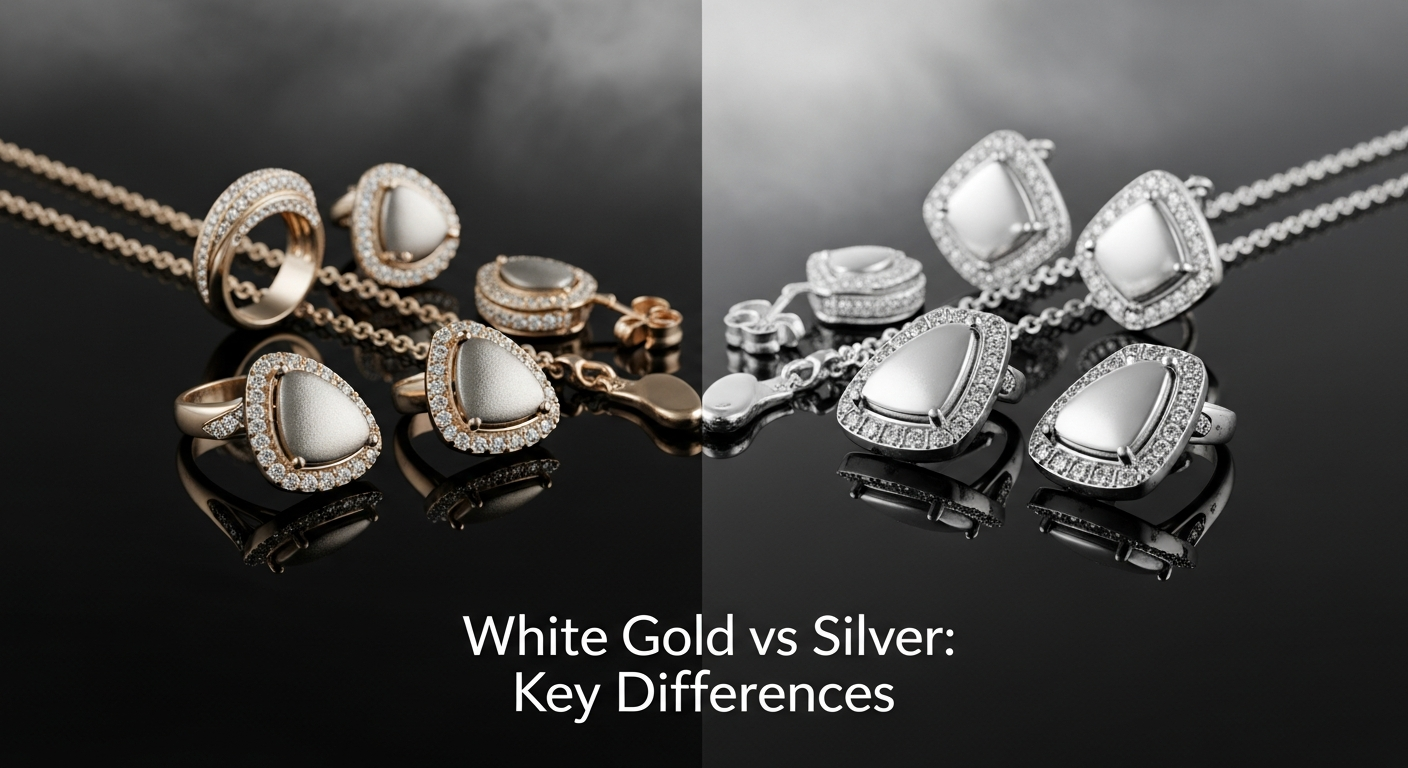
A key question is, “Does white gold look like silver?” Both have similar sleek, modern finishes, but closer inspection reveals distinct characteristics:
- White gold: Gives a warm, highly reflective shine from rhodium plating. Unlike silver, it will not tarnish, but can yellow slightly over time if the rhodium wears off.
- Sterling silver: Shows a cooler, brighter luster, but tarnishes easily, which dulls its shine sooner than white gold.
How to tell the difference between white gold and silver?
- Look for hallmarks, small stamps indicating the metal type (e.g., “14K” or “18K” indicates white gold, while “925” indicates sterling silver). If hallmarks are missing or hard to read, there are a few simple ways to tell metals apart at home: Silver often leaves a dark mark from tarnish when gently rubbed with a soft white cloth, while white gold does not.
- Check the weight: white gold pieces usually feel heavier than silver of similar size.
- Listen to the sound: if you gently tap two pieces together, silver produces a duller, softer ring compared to the slightly higher-pitched sound of white gold.
- Try a magnet: neither pure silver nor white gold is magnetic, but jewelry with a strong magnetic pull could contain other base metals instead.
- Watch for tarnishing: over time, silver jewelry may show visible tarnish or turn slightly black, whereas white gold will stay bright unless the rhodium plating is worn off and the underlying gold begins to yellow.
- These tips can help you distinguish between white gold and silver, especially if there’s uncertainty about maker’s marks.
- White gold jewelry feels heavier than its size suggests. (White Gold vs. Silver: What’s the Difference?, 2026)
- Silver can tarnish or develop a patina. White gold does not tarnish.
Durability: Silver vs White Gold
For daily wear, white gold is generally more durable than sterling silver because it is rhodium-plated, which protects it from scratches and tarnish. Silver is softer, more prone to bending, scratching, and tarnishing, so it needs regular cleaning. White gold is ideal for jewelry exposed to frequent wear, while silver suits pieces with lighter use or those changed often for style. Choose white gold for low maintenance; pick silver if you don’t mind more upkeep.
- White gold: Less likely to tarnish or deform. Needs occasional re-plating of rhodium for optimal appearance.
- Sterling silver: Can tarnish and requires regular polishing. More susceptible to scratches and dings.
Cost: White Gold Compared to Silver
White gold costs much more than silver because gold is far more valuable, and the jewelry-making process is more involved. Silver is affordable and best for those on a budget.
- White gold: Higher price point; considered a luxury metal
- Sterling silver: Affordable and accessible for most budgets
Hypoallergenic Properties
Sterling silver is usually hypoallergenic. White gold can cause reactions if it contains nickel; choose nickel-free or platinum-alloyed white gold for sensitive skin. Confirm certifications if allergies are a concern.
When shopping, ask the jeweler directly about the metal content and request to see any certification documentation. You can also look for clear labeling on product listings or packaging that indicates whether the item is hypoallergenic or nickel-free. Brands like Tiffany & Co., Blue Nile, and Mejuri are known for offering hypoallergenic jewelry pieces and may provide details about metal composition or certifications in their product information.
Maintenance and Care
- White gold: Requires occasional rhodium re-plating to maintain shine. Most white gold jewelry needs re-plating every 1 to 2 years, depending on how often it is worn, to maintain its bright appearance and prevent yellowing. Factoring this frequency into your jewelry care routine helps you plan for both upkeep and long-term costs.
- Silver: Needs frequent cleaning and polishing to prevent tarnish
Is White Gold Silver? Is White Silver the Same as White Gold?
A common misconception is that white gold is a type of silver or that “white silver” is another name for white gold. In reality, they are distinct metals with different properties. White gold contains gold; silver does not. There is no jewelry metal officially called “white silver”—sterling silver is simply the standard for silver jewelry.
White Gold or Silver: Which Should You Choose?
- Choose white gold if you want a more valuable, durable, and tarnish-resistant piece—especially for engagement rings or heirloom jewelry.
- Choose sterling silver if affordability, classic style, and easy availability are your priorities.
Conclusion
When choosing white gold or silver, weigh budget, desired durability, and personal style. Select white gold for value and long-term resilience; opt for silver for cost savings and versatility.
It is also important to consider how each metal holds its value over time. White gold generally retains more of its original value and may have better resale potential, especially if gold prices rise. Silver is more affordable upfront, but it tends to have a lower resale value because its market price per gram is much lower than gold’s. If you’re considering long-term investment or the potential to resell your jewelry in the future, white gold offers greater lasting value.
By understanding the difference between white gold and silver, you can make a confident, informed decision for your next jewelry purchase. Antique Silver Buyers can also assist you in appraising and selling your sterling silver items, ensuring you receive a fair market value for your cherished pieces.