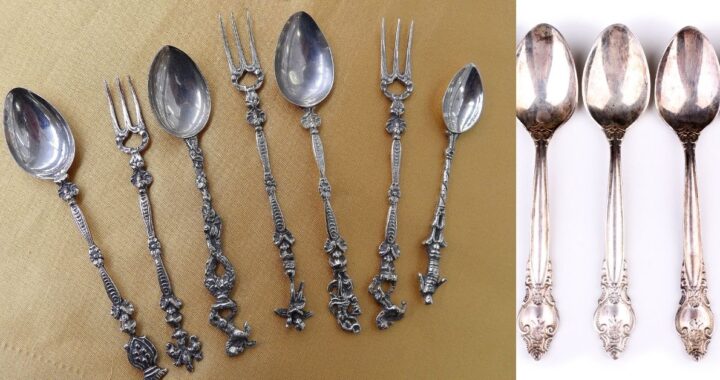
Antique silver flatware is often beautiful, valuable, and rich in history. But how can you tell where an old spoon, fork, knife, or serving piece came from, or whether it is truly made of silver? The answer often lies in the hallmarks stamped on antique silver flatware. Small symbols, letters, and numbers can tell you a lot about a piece, such as who made it, how much silver it contains, when it was made, and sometimes where it came from. These marks can be hard to understand if you are not sure what to look for.
The good news is that once you learn the basics of silver hallmarks, identifying antique silver flatware becomes much easier.
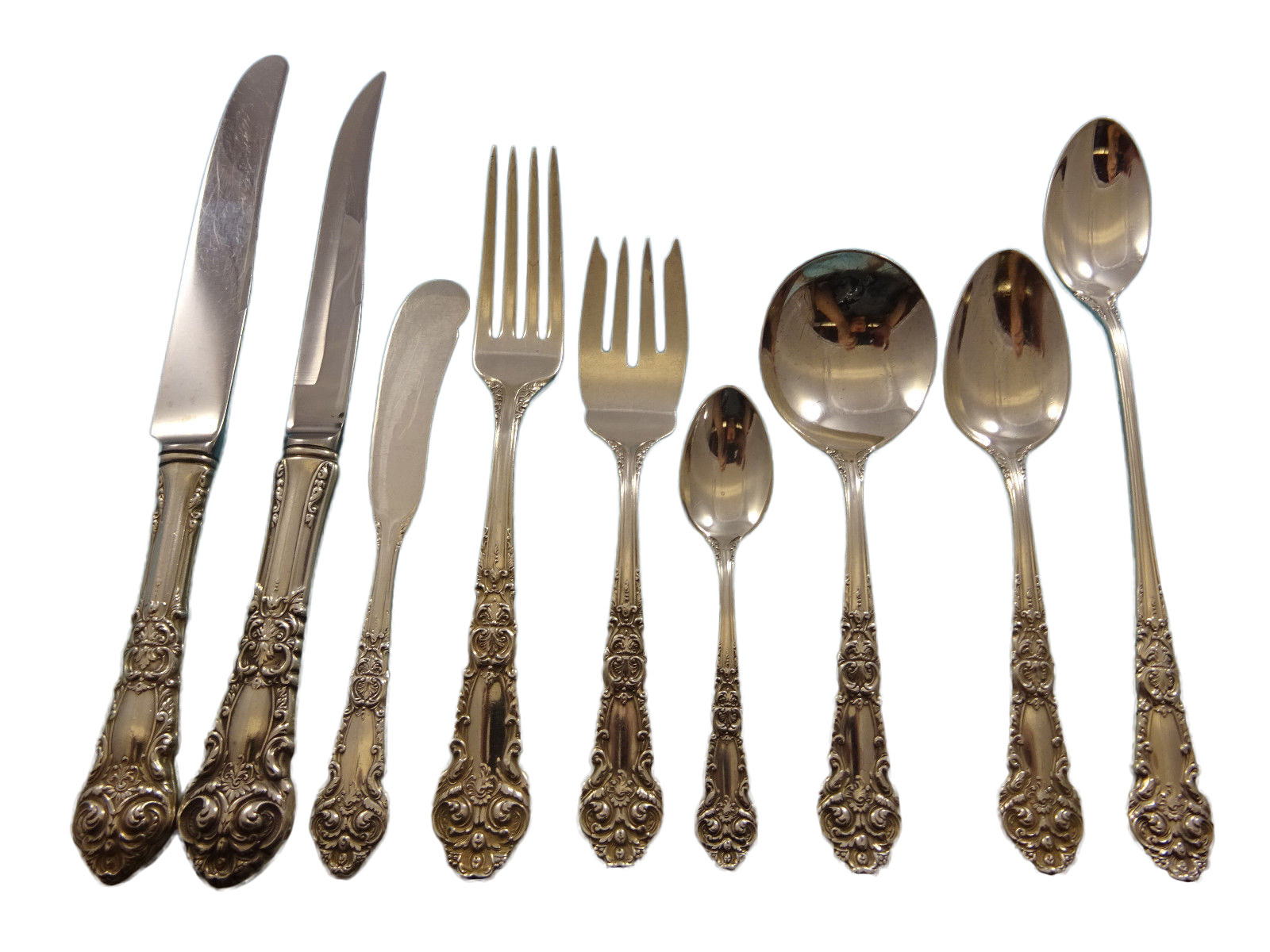
What Are Hallmarks on Antique Silverware?
Hallmarks are small stamps or marks applied to silver items to provide information about the piece. Depending on when and where the item was made, hallmarks may indicate its silver purity, maker, date, assay office, or place of origin. On antique silver flatware, hallmarks are often found on the back of spoons and forks, near the handle, or on other less visible areas. Knife blades or handles may also carry marks. Since these marks are often tiny or worn down from years of use and polishing, using a magnifying glass and good lighting can help you see them better.
Getting familiar with these markings is one of the first steps to identifying antique silver flatware.
Why Are Silver Hallmarks Important?
Picture finding a box of old silverware that has been in your family for years. The pieces might look beautiful, but you may not know their age, who made them, or if they are solid silver or just silver-plated. Checking the hallmarks can provide important clues. A well-known silversmith might have made what looks like an ordinary spoon or fork. It could be part of a sought-after pattern or have historical importance. On the other hand, something that looks like solid silver might just be silver-plated over another metal. That’s why checking the marks on silver flatware is so important when you are identifying and researching antique silverware, especially before buying or selling.
How To Identify Antique Silver Flatware Marks
1. Check for Marks
Start by carefully examining the flatware. Look at the back of spoons and forks, around the handles, and in other less visible areas.
Look for:
- Letters or initials
- Numbers
- Symbols or images
- Date letters or date marks
- Country or city marks
- Maker’s marks
- Purity or standard marks
Using good lighting and a magnifying glass can help you see small or worn hallmarks more clearly. If you find several marks together, photograph them clearly before attempting to clean or polish the piece.
2. Look for the Silver Purity Mark
One of the most useful marks to identify is the one indicating the silver content. A mark such as 925 generally indicates that the item contains 92.5% pure silver. This standard is commonly associated with sterling silver, although silver-marking systems vary by country and period. Antique silver may use different symbols or numbers depending on where and when it was made. For example, British silver has traditionally used a series of hallmarks rather than relying only on a number such as 925. Don’t assume that a number or symbol always means the same thing. Always look at the country, date, and other marks as a group.
3. Find the Maker’s Mark
The maker’s mark can be particularly useful when identifying antique silver flatware. A maker’s mark may consist of initials, a name, or a distinctive symbol associated with a particular silversmith or manufacturer. Once you identify the maker, you can research their history, production dates, patterns, and other pieces they produced. Knowing who made the piece can help you figure out its age, where it came from, its design, and how collectible it might be.
4. Consider the Origin
Hallmarks can sometimes help identify where a piece of silver was made or tested. Different countries developed their own hallmarking systems, and these systems changed over time. British silver, for example, may have several marks that provide information about the silver standard, assay office, date, and maker. When you are identifying antique silver hallmarks, don’t just focus on one mark. Look at all the markings together and see how they fit with each other.
5. Look for Date and Assay Office Marks
Some hallmarking systems include marks that can help identify when an item was tested or where it was tested or manufactured. In British silver, for example, a date letter can sometimes help establish the year associated with a piece’s hallmarking, while an assay office mark can indicate where it was tested. But date marks and other symbols can change depending on the country and time period. So, always look at them together with the maker’s mark and silver standard.
Common Mistakes When Identifying Antique Silver Flatware
Identifying antique silver flatware is not always easy. A common mistake is thinking that anything that looks old must be solid silver. Some pieces are actually silver-plated, which means they have a thin layer of silver over another metal. Others might have marks that look like real silver hallmarks but actually mean something else. A symbol that seems familiar can have a different meaning depending on where and when the piece was made. Another mistake is cleaning or polishing the piece too much before you identify it. Too much cleaning can wear away delicate hallmarks and remove details that are important for research. If you can’t see the marks clearly, take close-up photos and compare them with trusted hallmark guides. If the piece is unusual or might be valuable, it’s a good idea to ask an experienced silver specialist or appraiser for help.
How Hallmarks Can Help Determine the Value of Antique Silver Flatware
Hallmarks can be an important factor in determining the value of antique silver flatware, but they are not the only thing to consider. The value of antique silver flatware may depend on:
- Maker or manufacturer
- Age and rarity
- Silver content
- Condition
- Pattern and design
- Completeness of the set
- Historical significance
- Provenance
- Current collector demand
A rare maker’s mark, a popular pattern, an unusual design, or a special historical link can make a piece more appealing to collectors. But even silver from a famous maker might not be worth much if it is badly damaged, incomplete, or in poor shape. On the other hand, a rare or historically important piece can still be valuable, even if it is not part of a full set.
That’s why you should see hallmarks as a helpful starting point for research, not the only way to judge value.
When To Get Professional Help Identifying Antique Silver
If you have a big collection of silver flatware or think a piece might be valuable, getting a professional opinion can help you avoid expensive mistakes. An experienced silver dealer, appraiser, or antique expert can look at the hallmarks, as well as the item’s construction, pattern, condition, and history.
Professional assistance can be particularly useful when:
- Hallmarks are worn or difficult to read.
- Several marks appear unfamiliar.
- The piece may be particularly old or rare.
- You suspect the item may be valuable.
- You are considering selling a collection.
- You need help distinguishing solid silver from silver-plated items.
A professional assessment can give you a better idea of the item’s history, authenticity, and possible market value.
Frequently Asked Questions
1. How can you tell if your antique flatware is silver?
Look for purity marks, maker’s marks, and other hallmarks. A mark such as 925 can indicate that the piece contains 92.5% silver, but marking systems vary by country and historical period. Consider the complete set of marks when identifying the piece.
2. Where are hallmarks usually found on silver flatware?
Hallmarks are often found on the back of spoons and forks, usually near the handle or another less visible area. Knives may have marks on the blade or handle. The exact location can vary depending on the maker, country, and period.
3. Do all antique silver flatware pieces have hallmarks?
No. Some older pieces may have missing, worn, incomplete, or difficult-to-read marks. The absence of a visible hallmark does not automatically mean that a piece has no value, although additional examination may be necessary to determine what it is made from.
4. What does 925 mean on silver flatware?
A 925 mark generally indicates that the item contains 92.5% pure silver. This is commonly associated with sterling silver, but the meaning and use of silver marks can vary by country and period.
5. How can you tell the age of silver flatware from its hallmarks?
Certain date marks, maker’s marks, and assay office marks can help narrow down the age of a piece. However, identifying the exact date may require comparing several marks with reliable hallmark references.
6. Can antique silver flatware be valuable without hallmarks?
Yes. Although hallmarks can make identification easier, some antique silver pieces may have worn, missing, or incomplete marks. Age, rarity, maker, design, condition, provenance, and collector demand can all contribute to value.
7. What is the difference between sterling silver and silver-plated flatware?
Sterling silver flatware is made from an alloy containing at least 92.5% silver under the commonly used sterling standard. Silver-plated flatware consists of a base metal with a layer of silver applied to its surface. Identifying the marks and construction can help determine which type of item you have.
Final Thoughts
Identifying antique silver flatware hallmarks does not have to be hard. Start by examining the markings closely, checking the silver content and maker, and considering where and when the item was made.
Remember that no single mark should be interpreted on its own. The combination of hallmarks, construction, design, condition, and historical information can provide a much clearer picture of an antique silver item. Most importantly, do not judge an antique piece just by how it looks. A few small marks can tell you a lot about its history and may help you figure out if it is authentic, collectible, and valuable.