Antique Buyers Near Me

How to Become a Top Antique Dealer: Few Important Tips

Did you know that the antique market in the United States is valued at a whopping $17.6 billion? And it’s only expected to grow. If you’re passionate about the antique world, like me, you might be wondering how you can turn your love into profit. But becoming an antique dealer is not easy – it requires certain skills and traits that you need to master if you want to succeed.

As an antique dealer, you’ll be buying and selling different antique items like furniture, books, coins, sculptures, jewelry, military memorabilia, and paintings. You’ll need to have a deep understanding of these items and be able to determine their authenticity, rarity, and value. You’ll also need to know where to find the best deals and how to negotiate to get the best price.

However, before you venture into this endeavor, remember that being an antique dealer comes with significant responsibilities. To succeed in this fascinating industry, certain traits and skills are crucial. Let’s delve into these aspects to provide insights into a profession that can turn your efforts into profit.

What are antique dealers and what do they do?
Antique Dealers and What Do They Do

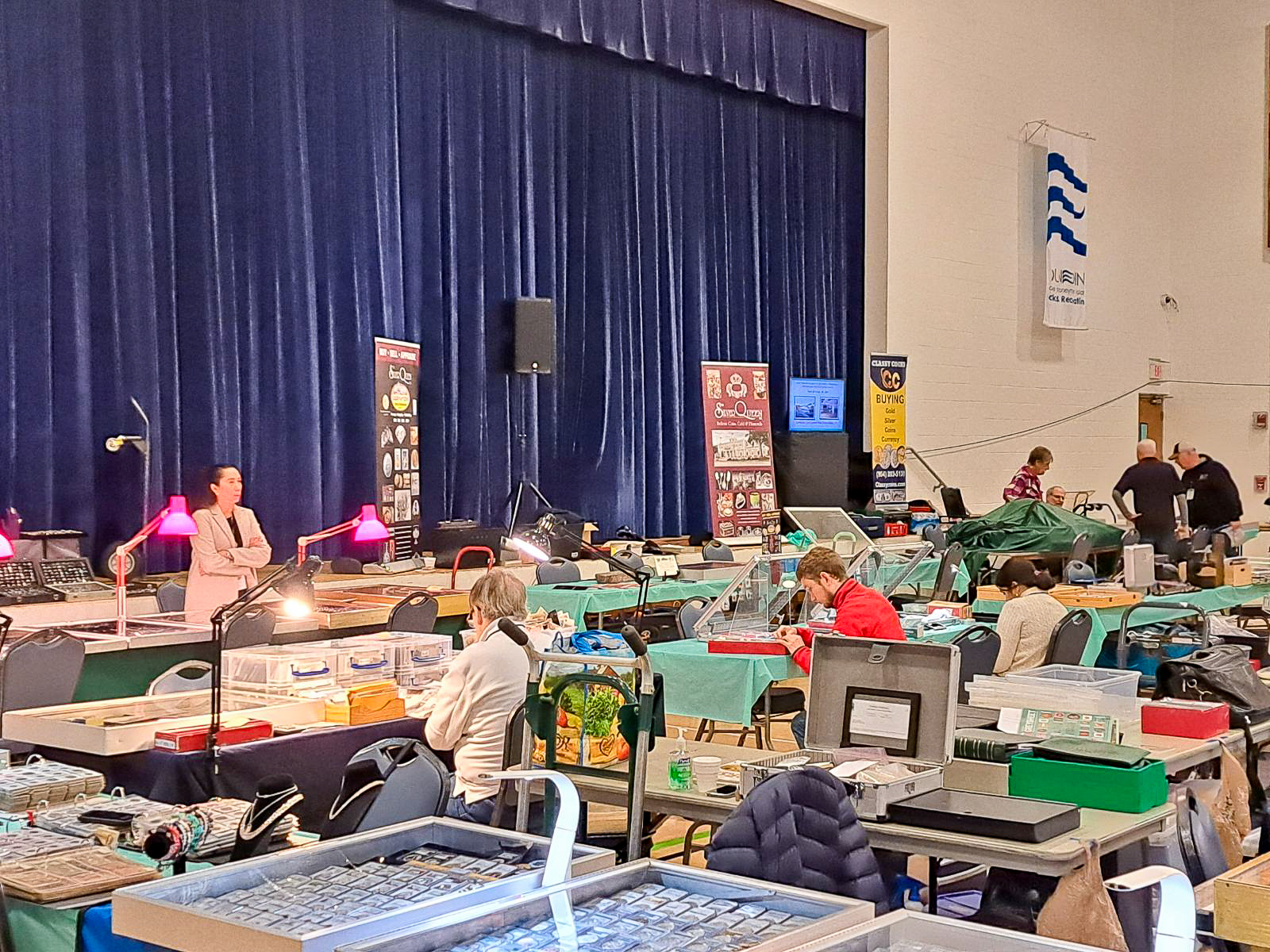
Antique dealers are professionals who buy and sell various antique items, including furniture, books, coins, sculptures, jewelry, military memorabilia, and paintings. They are passionate collectors of rare objects and carefully examine the authenticity of antique silver tea sets and other similar findings.

Their responsibilities include determining buying prices, performing necessary repairs, displaying items, setting selling prices, and finalizing deals. Additionally, they may share their knowledge to assist those investing in antiques.

Learn About Buyers and Where They Collect Antique Pieces From

Buyers and sellers of antique goods often search for and purchase items at auction houses, estate auctions, and antique fairs. They may acquire items from other buyers, inheritances, and flea markets. In the US, some of the top places to find antiques include:

  • Brimfield Antique Show in Massachusetts: This is the largest outdoor antique show in the country, featuring over 5,000 dealers and attracting 130,000 visitors.
  • Round Top Antiques Fair in Texas: This bi-annual event is held over 25 miles with thousands of vendors nationwide.
  • Scott Antique Markets in Atlanta, Georgia: This is the world’s largest indoor antique show, boasting over 3,300 booths and 500,000 square feet of space.

What Professionalism Is Expected from Vintage Item Buyers?

Antique/Vintage item buyers are expected to exhibit professionalism when dealing with antique items. They should have extensive knowledge about the condition, history, rarity, and popularity of the items they sell. This is particularly important when accurately identifying defects and fakes and appraising items like Tiffany silver flatware.

Practical communication skills are also a must-have for buyers as they interact with sellers, customers, and other dealers. They should be able to build rapport and trust with clients, handle objections, and conduct post-sale follow-ups to maintain positive relationships.

Find a Platform for Selling and Buying

When entering the dealing industry, choosing a platform for selling sterling silver flatware or building a collection is crucial. Online platforms with both offline and online presence offer several opportunities for selling and buying. Creating a personal website can also attract a targeted audience directly, resulting in converting clicks into customers.

Having your website has several benefits, including showcasing inventory attractively, reaching a global audience, enhancing credibility and reputation, and saving time and money by avoiding fees and commissions.

What Specialty Should Antique Dealers Have to Excel in the Industry?

To excel in the antique dealing industry, professionals should possess the following skills:

  • The ability to purchase items through auctions, trade shows, individual sellers, and online marketplaces.
  • The capability to sell antiques to the general public through stores or stalls located at antique centers.
  • Proficiency in negotiation skills for both purchases and sales.
  • The ability to study and identify the value of antiques.
  • Confidence in buying and selling antiques online.
  • Confidence in performing modest repair work on antiques.

Becoming an antique dealer is a unique journey shaped by individual niche interests. Explore online courses, webinars, magazines, newsletters, and books to further your knowledge.

Resources for Learning More about Antiques:

Many resources are available if you are interested in antiques and want to learn more about them. You can take online courses and webinars from organizations like the International Society of Appraisers, the American Society of Appraisers, and the Appraisers Association of America. There are also several magazines and newsletters that you can read, such as Antique Trader, Antiques and Fine Art, and Kovels on Antiques and Collectibles. Additionally, many books and guides are available, such as Miller’s Antiques Handbook & Price Guide, Warman’s Antiques & Collectibles, and Kovels’ Antiques and Collectibles Price Guide. These resources can help you learn more about antiques’ history, value, and appreciation.

These resources let you stay updated on the latest news and trends in the antique industry, enhancing your expertise and success as an antique dealer.
Lemon juice antique cleaner

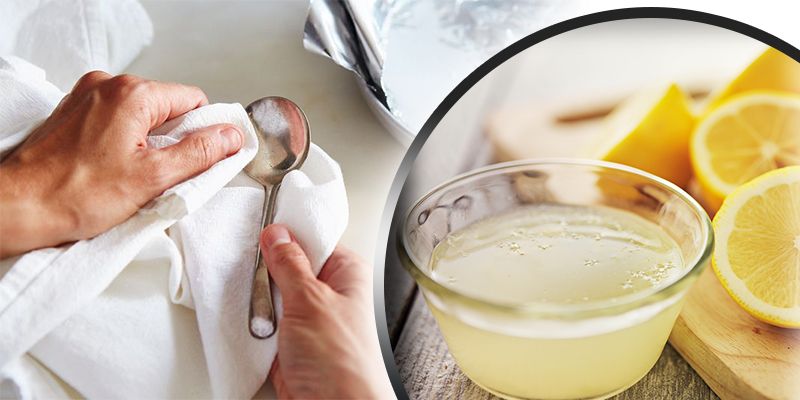
How to Clean Sterling Silver Naturally?

Learn how to naturally clean sterling silver. In the blog post shared, a comprehensive guide provides effective and eco-friendly methods to restore the brilliance of your silver items. Discover homemade solutions and techniques to remove tarnish and dirt from sterling silver without the use of harsh chemicals. From baking soda and lemon juice to vinegar and aluminum foil, we cover a range of natural cleaning methods. Our expert tips and step-by-step instructions ensure safe and efficient cleaning, preserving the beauty of your sterling silver. Visit our website now to explore our guide and keep your silver shining bright the natural way.

Do you have a tarnished sterling silver piece that you are hoping to clean, but don’t want to use any harsh chemicals? If so, you are in luck, as there are several safe and natural ways to clean sterling silver, many of which involve items that you already have in your home.

Cleaning Sterling Silver with Corn Starch

A quick search of your pantry might find you a great solution to clean your sterling silver. A mixture of cornstarch and water in the form of a paste can make your silver look like new again. Apply the paste with a damp cloth, then let it dry and rub it off with a mildly abrasive towel. If you don’t happen to have any cornstarch at home, cream of tartar could be a suitable substitute.

Vinegar

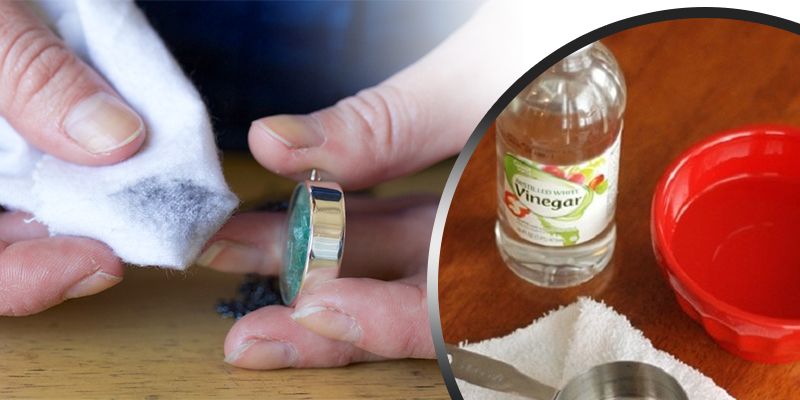
If your sterling silver jewelry or silverware has lost its shine and luster, try soaking it in a solution of ½ cup of white vinegar and 2 tablespoons of baking soda. Allow it to sit for two or three hours, and then remove it and rinse with cold water. Make sure you dry off your piece thoroughly in order to prevent tarnishing.

Vinegar antique cleaner

Lemon Juice

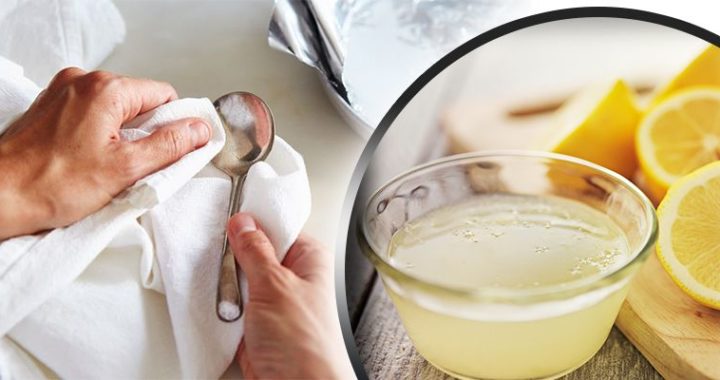
If you want your silver to sparkle, a mixture of one tablespoon lemon juice with1 ½ cups of water and ½ cup of instant dry milk can be a good option. The end result will be silver pieces that shine, all without the use of chemicals or store bought solutions. Not only is it a good option for silver jewelry, but the lemon solution can also be beneficial for rusty knives and other silver pieces.

Lemon juice antique cleaner

Tomato-Based Paste

Tomato-based pastes like ketchup are a good way to help restore your silver pieces back to their former glory. Use a small bowl and fill it up with ketchup, and then dunk in your silver piece of jewelry. To scrub the piece, use a toothbrush, as this can help to clean the areas that are hard to reach. You should only leave the ketchup on for a couple of minutes, and then use water to rinse it. A microfiber cloth is a good option for the final polish.

Baking Soda

Sterling silver will react with moisture in order to create a layer of tarnish. Baking soda that is activated by hot water can dislodge this tarnish when aluminum is present, leaving your jewelry shiny and clean once again. To try out this option, boil enough water that your sterling silver piece can be completely submerged, and then add in a tablespoon of baking soda along with a sheet of aluminum foil. Use a plastic or wood utensil to move the item around so that all surfaces will contact the aluminum. Finally, rinse and wipe down the piece of jewelry, and you should be left with a beautiful piece.

If you have sterling silver jewelry or antiques, you don’t have to go out and buy an expensive sterling silver cleaner. By using some common and natural household items, you can get the look that you want without spending a fortune.


Sterling flatware

Christofle Sterling Silver Marks & A History of Christofle Sterling Silver Marks

Christofle is a French manufacturer of fine silver flatware and other home accessories. The company was founded in 1830 when Charles Christofle, then a popular jeweler, expanded his line to include silver picture frames, porcelain dinnerware, crystal vases, and hollowware. A variety of designers and artists helped to create Christofle’s pieces, included famed Parisian silversmith Antoine Perrin, Jean Cocteau, and Gio Ponti, among others.

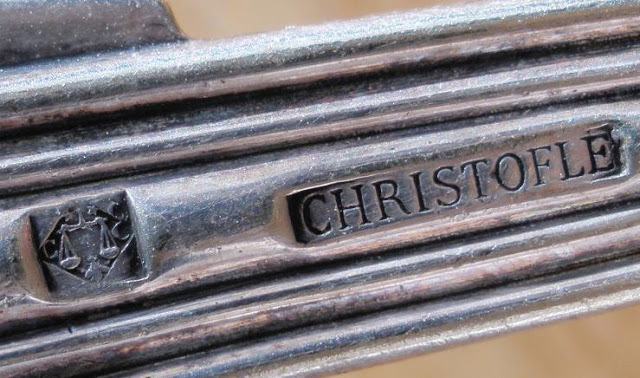
Like most prominent silver designers, Christofle wanted a way for his customers to identify his pieces and their authenticity. To do this, he placed a hallmark on each of his products through the use of a complex stamping process. These hallmarks are created to identify authentic silver at purchase, and they are intended to be easily seen by the user.

Sterling flatware

A History of Christofle Sterling Silver Marks

Charles Christofle was the first person to introduce French-made electroplated silver to the world. His pride over this accomplishment led him to mark his items to properly identify his work, and this mark has varied over time. Early marks included the initials “G” and “C” along with a scale in the center. Later marks include the word “Gallia” for the Christofle Gallia silver range above a cockerel. Many pieces are also stamped with “Christofle” next to the maker’s mark.

Silver Marks Since 1976

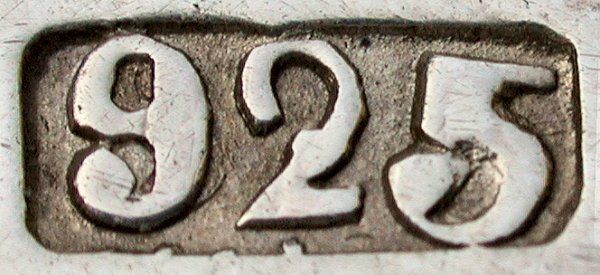
At the International Hallmark Convention in 1976, changes were made to silver marks that would be accepted in the United States, England and the rest of Europe. To identify an item as sterling silver, most manufacturers adopted the standard silver mark of 925. This indicates that the silver content of a piece is 92.5% – the mandatory amount for an item to claim to be sterling.

If you have a piece that you believe to be an authentic Christofle but it doesn’t contain the 925 stamp – or any other silver hallmark – you should be leery of both its silver content and its overall authenticity. While there are other tests that can help you determine if the item is actual sterling or is simply sterling plated, an antique dealer might be your best option to determine if you are really in possession of a Christofle antique.

925-silver-mark

Have Your Silver Examined By a Florida Silver Buyer

Do you believe that you might have a silver Christofle piece, but you’re not sure if it is authentic? The experienced Florida silver buyers at Antique Silver Buyers can help. Not only do we have experience identifying the hallmarks of Christofle items, but we can also tell you exactly how much your piece – or collection – might be worth. With a comprehensive market analysis, we’ll give you an idea about how much your antique would sell for at an auction. We’ll even purchase them (at a bid just below our market analysis) if you are interested in selling.

Sterling Silver Marking

Silver Appraisal: Know the Current Market Value of Your Silver

If you have silver, it is important that you know exactly what it is worth. This is especially important if you are contemplating selling the item. There are silver flatware collectors that will buy your item if you are willing to sell but you need to establish the true value of what you have.

First, know the type of silver you have

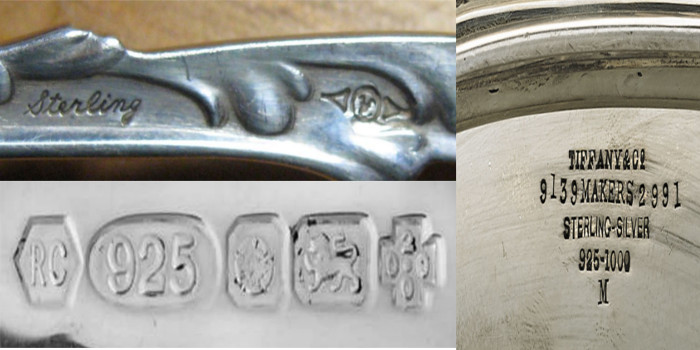
Sterling silver flatware are made of real silver unlike silverplate that are metals coated with silver to look like the main thing. Your first step is to establish that the item you have is sterling silver. In the United States, for instance, every silver created after 1850 is stamped with one of these three marks:

  • Sterling
  • .925
  • 925/1000

Unless the silver was made before 1850, you will see one of these stamps. If you find the stamp, you are a step closer to knowing the current value of your silver.

Finding the Value of Antique Silver

Once you are certain you have a real silver, it is time to know your antique flatware worth. An expert will be needed to ascertain the actual worth but you can make some progress on your own.

Antique silver flatware patterns are necessary to get the significant information that can let you determine the current worth of the silver or make an estimation that is close to the actual value. You will also need to find out the manufacturers of the silver. Asides from the sterling stamp, silver items have hallmarks that you can use to know the manufacturer and other important information like the date it was produced.

When you know the pattern and the manufacturer of the silver, you can check the retail price for replacement pieces online; you can also get detailed information about the age and value of your silver from most of these sites.

There are several websites with resources that can help you figure out the current market value of your silver. You can also use antique appraisers and dealers to help you with it but make sure whoever you are dealing with is reputable.

Get your FREE verbal, no obligation appraisal!

History Behind Silver Markings

Uncover the fascinating history behind silver markings at our blog. Our guide explores the development of silver markings and their importance in identifying the age, maker, and origin of silver items. From the earliest hallmarks to modern-day assay marks, we delve into the intricacies of silver hallmarking and decode its various symbols. Our expert historians offer valuable insights into the context of silver marks and their role in the silver trade. Read our blog now to discover the rich history and significance behind silver hallmarks and become a knowledgeable collector or seller of antique silver.

Silver Markings – Silver has been mined from the earth for thousands of years. Old World silver and silver markings have been traced back to modern day Turkey, as early as 4000 BC. But it wasn’t until around 2500 BC that we have solid accounts of the first sophisticated mining and refinement process of the precious metal known as “cupellation.” Since that time, civilizations have risen and fallen, each leaving their own characteristic imprint on silver before it became a valued currency in America. Due to the wide variability in purity, integrity and origin silver markings were developed to distinguish and verify each piece.

The Importance of Markings

Silver Markings

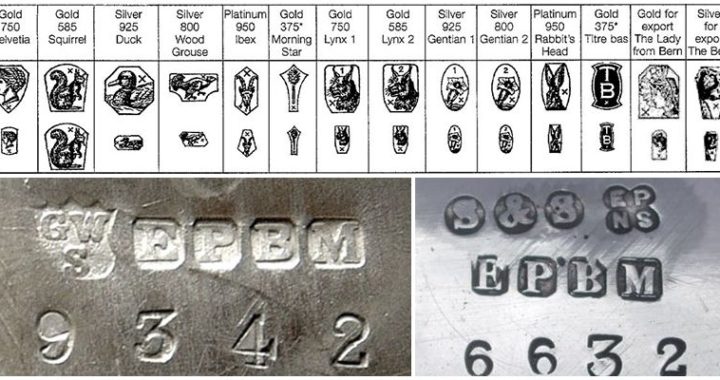
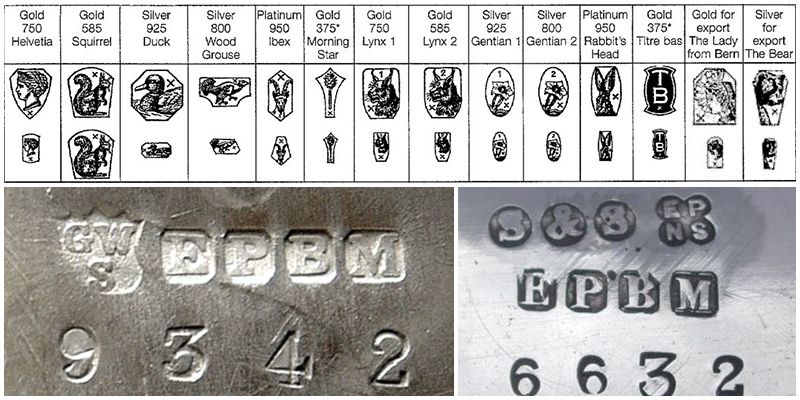
One of the most imperative distinguished to make is whether the piece is sterling silver or if the piece is merely sprayed with a layer of silver atop another, less valuable, base metal, known as plating. Once you have determined if the piece is sterling or plated silver, other markings denote such valuable information such as:

– Makers Mark; this is usually denoted by the silversmiths initials of the first and last name
– Firm Name; often added along with the Makers Mark
– Date; usually just the year the piece was crafted
– Assay; this mark proves the piece was inspected and verified. It may also contain an additional standard symbol to denote purity. Silver is a soft metal and even sterling has a small percentage of another metal to give it strength.

Silver markings not only help collectors to identify key characteristics of the piece for valuation, they divulge a rich history, and to a collector, that is of great worth.

Silver Markings across Civilizations

Identifying the markings on a piece of silver is quite the task as there are hundreds of different symbols. Each civilization has created their own stamp and that stamp has evolved as different authorities have altered the design for various purposes such as taxes or even pride. Tracing them can be difficult for many reasons. Sometimes the pieces are well worn and the stamp has become hard to distinguish to an untrained eye. There are often minute details separating an assay’s mark, such as a small number or letter that helps to determine the value based on purity. Even if the markings can be clearly established, some of the registration records have been destroyed, making complete identification almost impossible to achieve in some cases.

No matter what type of piece; coin, flatware, tea sets or candelabra, there will be markings on it. If there are no markings, the piece is not valuable and could be fraudulent.

Each nation still has an abundance of well-documented markings to make identification possible, even if some of the markings have faded away with time. If you have a silver piece you would like to know more about, contact a knowledgeable professional who is familiar with the different eras and aspects of markings. The markings are what determine the value of your piece so it is important to have it identified correctly, whether you want to have it appraised for insurance purposes or if you are looking to sell the piece.

Get your FREE verbal, no obligation appraisal!

Your First Step To Understanding the Buying and Selling World of Antique Silver Flatware

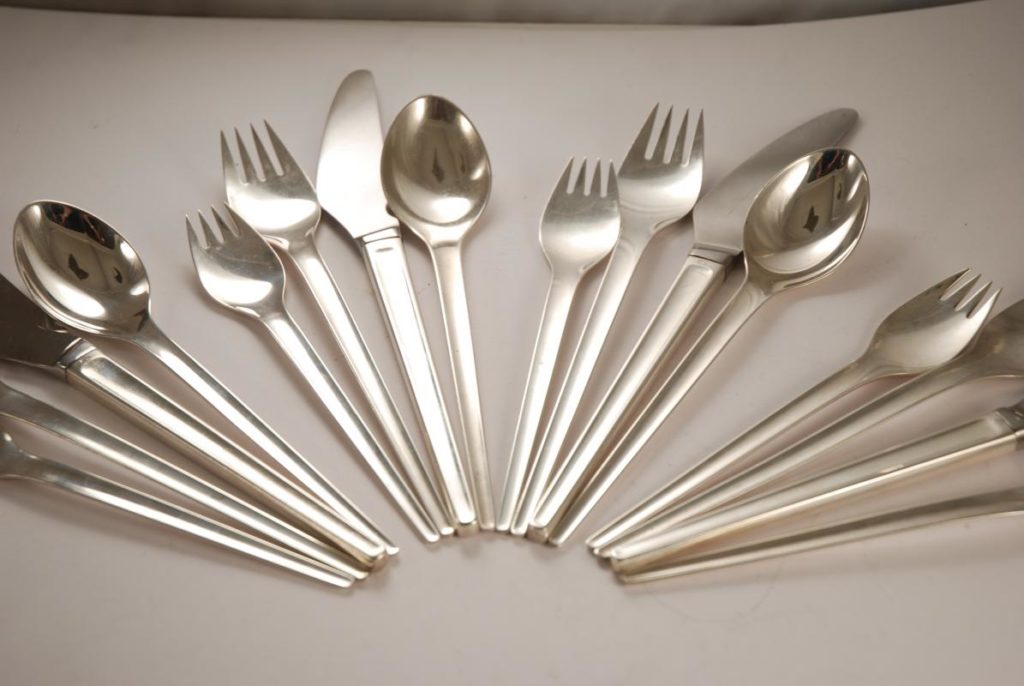
Antique silver flatware remains among some of the most collectible types of antique silver on the market. With intricate craftsmanship and impressive presentation both decoratively and in treating your house guests to a special evening, antique silver flatware collectors can place very high values on these items.

Today, I want to talk about both sides of the market. What you might expect for prices on antique silver flatware, and to help answer the question, “Where can I sell my silver flatware?”
Where can I sell my silver flatware
You’ll find lots of valuable information on my site and within these blog posts about determining the value of your silver. How to identify the quality of your silver. Even who the best buyers of silver flatware are and what selling sterling silver flatware may entail for you.

As I’ve mentioned time and time again – you can easily take the first step yourself. Silver markings or Silver Hallmarks can, in many cases, be quite easy to identify. This is an important first step as it will help you understand the purity of your silver.

This is important as I’ve seen silver plated flatware sell for as low as $50 whereas a beautiful set of Rogers sterling silver flatware could be valued at $3000 or higher. Unfortunately there is no hard and fast rule. Silver value (your silver’s weight value) and the value added by it’s history, condition and demand can drastically alter the price
an antique silver flatware buyer may be interested in paying.

silver flatwares

Once you’re somewhat confident in a basic understanding of what quality or rarity your silver may have, I always recommend that people talk to a professional to get a better, more complete picture.

If you are looking to get the best price for your antique silver flatware at a local jeweler or pawn shop, you may need to look hard to find one that pays you the true worth of your item; if you are looking to sell from the convenience and comfort of your own home, you can send me photos and information on your silver and I’ll surely give you the best deal on antiques.

If you’re looking sterling silver flatware for sale, you’re options are also plentiful. I often recommend auction houses as you can see the items in person and stand to potentially get them for a good price. Online auctions are also quite popular.

However if you prefer the more personal touch there are many local antique and pawn shops you can explore. This is a secret pleasure of mine as the process itself is becoming antiquated in its own right and once and a while you might just stumble across a great little treasure.

Either way, whether your buying or selling, I wish you happy hunting!

Get your FREE verbal, no obligation appraisal!

Decoding Hallmarks – A Guide to Reading Hallmarks on British Silver

Hallmarks are used by the Royal Mint to identify the date, mint mark, and other information about each coin that it produces. They’re also used to authenticate antiques that were produced before the introduction of modern technology in the early 20th century.

Learn how to decode them and what they mean.

The Royal Mint uses three different hallmarks to identify its products. The first two are the year and mintmark, while the third identifies the type of metal being used. The year is usually stamped at the top left corner of the coin, followed by the mintmark. The mintmark is usually stamped below the year.

The mintmark is made up of a number and an abbreviation. The number represents the year when the coin was struck, while the abbreviation indicates where the coin was minted. For example, “R” stands for the Royal Mint, “D” stands for the Devon Mint, and “S” stands for the South Wales Mint.

The last hallmark is the type of metal being produced. This is indicated by the letter “M.” If the coin is made from copper, then the letter will be “C.” If the coin is silver, then the letter will read “A.” And if the coin is gold, then the letter will say “G.”

If you’re thinking about purchasing silver made in the UK, you want to make certain that what you’re buying is pure silver. Otherwise, you may be paying a lot of money for something that isn’t worth much at all. In order to identify the pieces you’re buying as true silver items, you need to understand British silver hallmarks. Here’s a quick rundown of what these marks include.


Hallmarks on British Silver

A Standard mark

The first step to identifying silver hallmarks is to look for the standard mark. There were five different marks used on British silver, and they’re easy to recognize. They are the walking lion, the standing lion, the thistle, the crowned harp, and the symbol of Britannia. If you can’t find one of these marks on the item, it was likely silver plated or was made elsewhere.

The Town Mark

The next mark to check for is the town mark. This mark identifies where exactly the piece was manufacture red. There are a number of these silver hallmarks, so you may need a reference guide to determine what town the mark on your item represents.

The Duty Mark

The duty mark was only used between 1784 and 1890. It indicated that a duty was paid on the silver. Older items may have the King’s head, indicating that the item was made between 1784 and 1837. When Queen Victoria took the throne, the mark was changed to the Queen’s head. These antique silver hallmarks are useful in determining when a piece was made.

The Date Letter

This letter indicates when the silver piece was made. The letter changed periodically, and each town often used a different font or even a different letter. Again, this is something that you will need to use a guide for, and you’ll need to determine the town mark first.

The Maker’s Mark

Finally, there’s the marker’s mark. This mark is the symbol or initials of the maker or manufacturer. It’s the final piece needed to determine exactly where, when, and who made the silver piece.

Smart Ways to Sell Family Silver for Cash

If you’re looking for an easy way to make money, selling your silver might be just the thing. Here are seven smart ways to sell silver that will help you earn extra cash.
When you decide it’s time to sell off your family’s antique silver, you want to be sure you get the best value for it.Selling silverware, teapots, and other similar things is a bit more complicated than just heading down to your local pawn shop—at least if you want to get top dollar.To sell silver and get the most out of it, you need to know a few things. Here are a few tips on finding antique silver buyers in Florida, and getting the money that your family silver is truly worth.

Finding Out Where to Sell Silver

Second, the people who work in pawn shops are kind of a jack of all trades when it comes to purchasing and selling goods. They don’t have the trained eye that is required to truly evaluate the worth of a piece. A pawn shop employee may believe that he or she is offering you a great price and unknowingly underbid you for your family silver.
Antique Pawn Shop

Before you take your silver in, spend some time polishing it. A trained eye will see the silver’s value, regardless of whether you polished it or not. Still, silver buyers are people, too, and leaving a good impression will never hurt your position.
Never settle for the first offer you get. Remember, these people make a living by buying low and selling high. Get two or three offers, then consider which one you feel is best for your situation.
An alternative to this would be to take your family silver to a silver dealer for an evaluation as to its value. Be very clear beforehand that you are willing to pay him or her for his or her expertise in valuing the silver, but you will not be selling to him or her (that removes any incentive to provide a lower than usual valuation). Then, using that valuation as a baseline, shop around and see what kind of offers you can get.

Get your FREE verbal, no obligation appraisal!

Antique Silver

Is Antique Silver A Good Acquisition? Know from the Antique Silver Experts

There are people who love decorating their homes with antique items, and also there are few people who are looking for selling them. Do you like to deck up your home with antique silver items or want to sell them? You want to sell silver tea set, but you do not know the right place to sale.

Put a halt to your search for a while and have a quick glance of our site. We can help you with your items. We are one of the trusted antique silver buyers in Florida & also we offer worthy price of your vintage pieces.

We have been into dealing items of various antique, vintage & estate silver items since last many years. Like all other valuable metals, silver has always been one of the pricey metals whose value never seems to get decreased.

Sellers can expect to get best price when they sell silver items to us. Selling sterling silver flatware & finding silver buyers near me is not hard. When you search for the same, then your eyes will catch of our online site at first.

what-is-antique-silver

How to Choose Silver Buyers Near Me In Florida?

People hesitate to sell their precious items from stores or online. The reason of hesitation is that they think they will not get the worthy price for their item & will be fooled by getting less price. We are the trusted collector of silver items in Florida.

We are not only known as one of the reliable antique silver buyers, but also, we are one of the largest sterling silver buyers in Florida.

In the age of internet, selling silverware online is not a tough task. Many trusted dealers are present in online world and are looking for you to sell your precious items.

One of The Eminent Sterling Silver Buyers

If you wish to know your silver flatware value, then you have come to the right place. Get a look into our website and know about our service & much more. A large number of people sell sterling silver pieces to us and are happy with the cashback we have offered them for their ancient precious item.

Buying the finest antique silver items and sterling silver items from one of the well-known sterling silver buyers will turn out to be profitable for you.

We are reckoned as one of the acclaimed sterling silver buyers. Hence, you can be assured of dealing genuine quality silver flatware set from our online store. Also, the collection of each sterling silver item you will find in our store- The Silver Queen will mesmerize you. Here, you can see the collection and choose your favorite and decorate your home or yourself.

Get Fair Price for Your Antique Silver Items

We offer fair price for the exquisite Tiffany silver flatware such as silver tea sets, trays, bowls, other silverware you want sell to us. We offer good price for the marvelous old silvery pieces as compared to other antique silver buyers.

We offer appropriate value for the items, looking on the craftsmanship, age and the quality of the pieces through appraisal session. Get your money’s worth by selling the fascinating antique silver materials to us.

Substitute the premier antique silver items of your home with our one-of-a-kind silver items. Get in touch with one of the professional antique silver buyers in Florida now.

Get your FREE verbal, no obligation appraisal!